
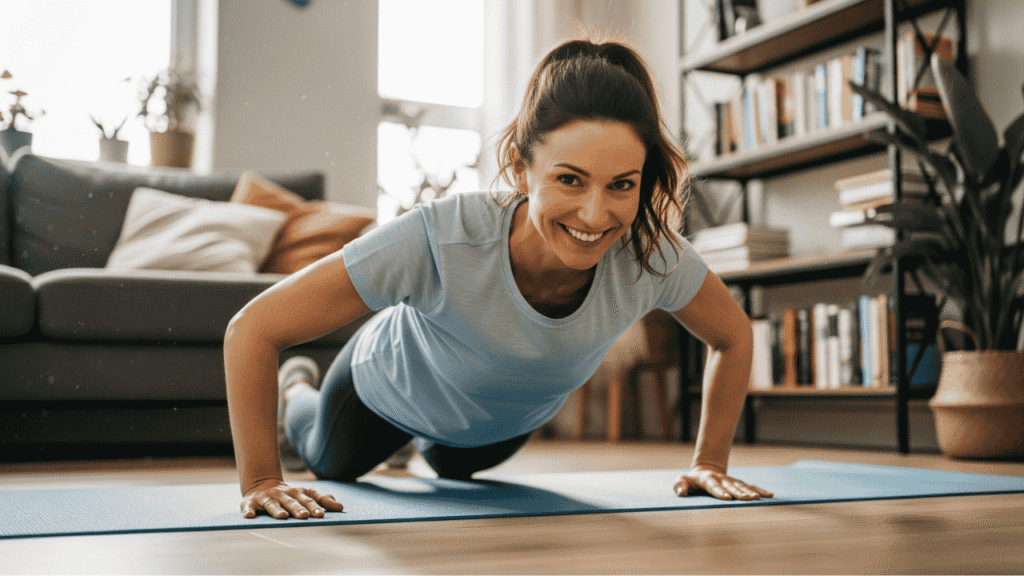
A beginner friendly calisthenics workout is the perfect way to build strength, burn fat, and get fit without needing a gym. I still remember my first encounter with calisthenics. No fancy machines, no expensive gym membership — just me, a pull-up bar in the park, and a burning desire to get stronger. Back then, I didn’t even know the word “calisthenics.” I just thought of it as push-ups, squats, and pull-ups. But over time, I realized that this simple style of training could build not only muscle and strength but also confidence and discipline.
If you’re reading this, chances are you’re curious about starting your own calisthenics journey. Maybe you’re tired of overcomplicated workouts, or maybe you just want to build a strong, toned body at home with no equipment. Whatever your reason, you’re in the right place.
Today, I’ll walk you through everything you need to know about a beginner friendly calisthenics workout — from what it is, why it works, to a step-by-step routine you can follow starting today.
Table of Contents
What is Calisthenics?
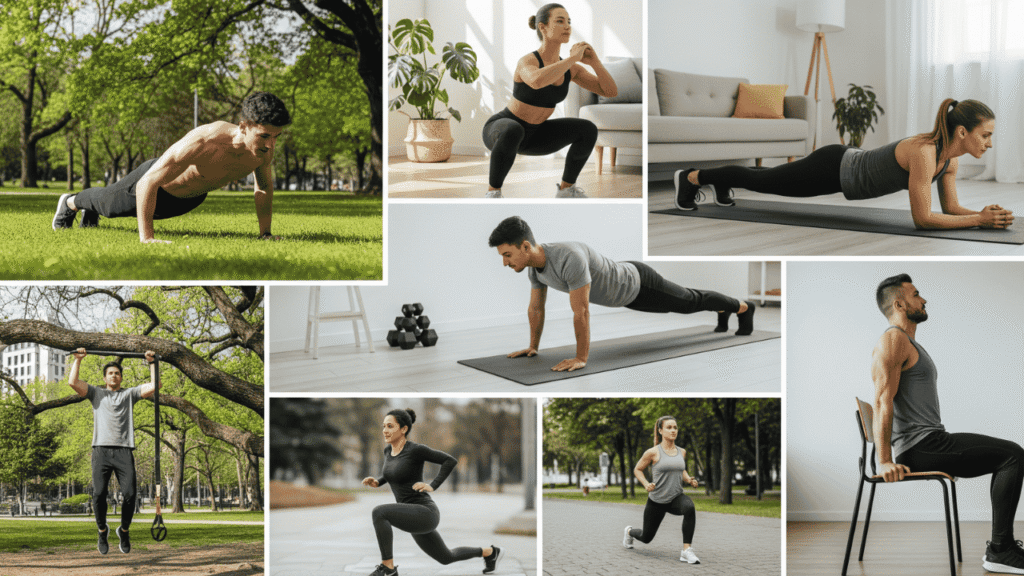
Put simply, calisthenics is bodyweight training. Instead of lifting dumbbells or barbells, you use your own body as resistance. Exercises like push-ups, squats, lunges, planks, and pull-ups all fall under calisthenics.
The beauty of it?
- No equipment needed (except maybe a bar for pull-ups if you want).
- You can do it anywhere — home, park, hotel room, even your office break room.
- It trains your whole body naturally, the way it was designed to move.
Think of calisthenics as the foundation of fitness. Even pro athletes and military soldiers rely on these basic moves.
Why Choose a Beginner Friendly Calisthenics Workout?
When I started coaching women and men in their 20s, 30s, and even 50s, one pattern stood out: many beginners wanted something simple yet effective. They didn’t want to get lost in complicated machines or heavy weights.
Here’s why calisthenics is perfect for beginners:
- Low barrier to entry – You already have everything you need: your body.
- Builds real strength – Not just muscle, but functional strength you use in daily life.
- Scalable – Every exercise has easier and harder versions. Can’t do a push-up? Start with wall push-ups. Too easy? Move to decline push-ups. In fact, ACE Fitness outlines the many benefits of bodyweight training.
- Safer than heavy lifting – Less risk of injury when movements are controlled and bodyweight-based.
- Confidence booster – The first time you do a full push-up or pull-up, you’ll feel unstoppable.
My Story: Struggling With the First Push-Up
Before I give you the workout, let me share a quick story.
When I first began, I couldn’t do a single proper push-up. My back sagged, my arms shook, and my ego took a hit. But instead of quitting, I started with wall push-ups, then moved to incline push-ups on a bench, and finally nailed my first clean push-up on the floor.
That moment taught me two things:
- Progress is about small, consistent steps.
- Every “advanced” athlete you see started as a beginner once.
So if you’re struggling now, don’t worry — that’s part of the process.
Beginner Friendly Calisthenics Workout (Full Body Routine)
Here’s a simple 3-day weekly routine you can follow. No equipment, no confusion. Just 6 fundamental moves.
Warm-Up (5 Minutes)
Always warm up before training. A quick routine:
- Arm circles – 20 seconds
- Jumping jacks – 30 seconds
- Hip rotations – 20 seconds each side
- High knees – 30 seconds
Now, let’s dive into the workout.
1. Push-Ups (Chest, Shoulders, Triceps)
- Beginner version: Wall push-ups or incline push-ups.
- Goal: 3 sets of 8–12 reps.
👉 Coaching Tip: Keep your body straight like a plank. Don’t let your hips sag.
2. Bodyweight Squats (Legs, Glutes)
- Form: Stand shoulder-width apart, sit your hips back like a chair, and rise.
- Goal: 3 sets of 12–15 reps.
👉 Coaching Tip: Imagine you’re lowering yourself onto a chair behind you. Don’t let your knees cave in.
3. Glute Bridges (Glutes, Hamstrings, Core)
- Lie on your back, knees bent, feet flat. Lift hips, squeeze glutes, lower slowly.
- Goal: 3 sets of 12–15 reps.
👉 Coaching Tip: Don’t arch your lower back; focus on squeezing your glutes at the top.
Glutes are the powerhouse of your body. For more targeted moves, see my guide on glutes dumbbell exercises.
4. Plank (Core Stability)
- Form: Elbows under shoulders, body in a straight line.
- Goal: Hold 20–40 seconds, 3 rounds.
👉 Coaching Tip: If it’s too hard, drop to your knees. Build up slowly.
Planks fire up your entire core. If you want variety, try my ab workout for women at home without equipment.
5. Superman Hold (Back, Core, Posture)
- Lie face down, lift arms and legs slightly, hold for 3–5 seconds.
- Goal: 3 sets of 8–10 reps.
👉 Coaching Tip: This strengthens your lower back and fixes slouched posture.
6. Assisted Pull-Ups / Rows (Back & Arms)
- If you have a bar, try assisted pull-ups using resistance bands.
- No bar? Do inverted rows using a sturdy table edge.
- Goal: 3 sets of 6–8 reps.
👉 Coaching Tip: Focus on pulling your chest up, not just your chin.
Cool Down (3–5 Minutes)
End with stretching:
- Child’s pose (back)
- Hamstring stretch
- Shoulder stretch
- Deep breathing
Weekly Plan Example
Here’s how you can structure it without overtraining:
- Day 1 – Workout (Full body)
- Day 2 – Rest or light walk
- Day 3 – Workout
- Day 4 – Rest or yoga
- Day 5 – Workout
- Day 6 & 7 – Rest or light activity
How to Progress Over Time
Calisthenics is all about progression. Here’s how to grow stronger:
- Start with easier variations → move to harder ones. (Wall push-ups → incline push-ups → full push-ups).
- Add reps and sets as you get stronger.
- Increase time under tension — for example, holding a plank 10 seconds longer.
👉 Remember: Progress is progress, no matter how small.
Common Mistakes Beginners Make
As a coach, I’ve seen many beginners get discouraged because of these mistakes:
- Skipping warm-up – leads to injuries.
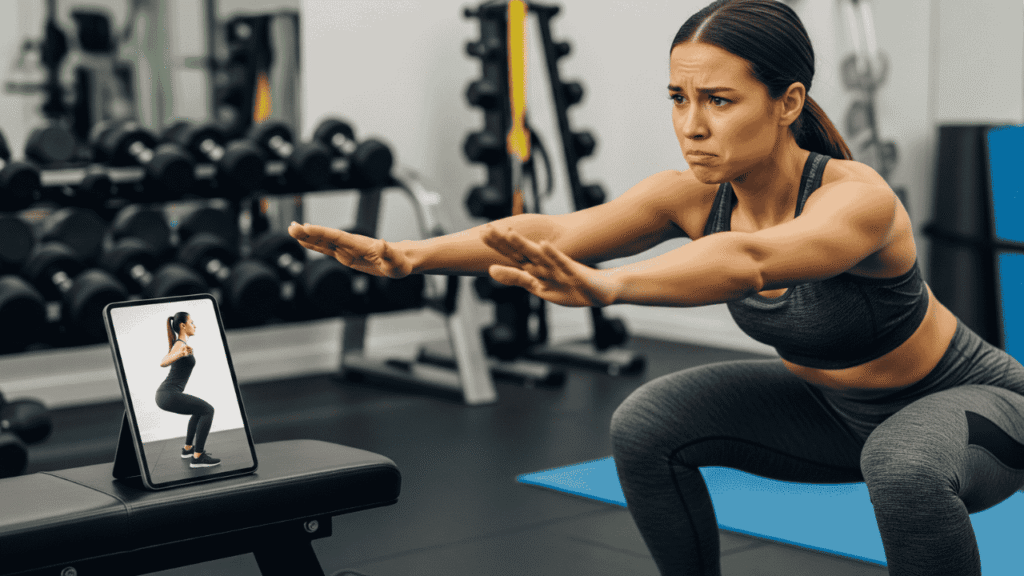
- Bad form – Doing more reps badly is worse than fewer reps with good form.
- Inconsistency – One workout won’t change you. But three workouts a week, for three months? That’s transformation.
- Comparing yourself to others – Focus on your journey, not Instagram athletes.
My Coaching Experience: Success Stories
One of my clients, a 42-year-old woman, came to me saying she had never worked out in her life. She couldn’t do a single push-up or squat without knee pain.
We started slow — wall push-ups, partial squats with a chair, and 10-second planks. Fast forward 6 months, she was doing full push-ups, holding a 1-minute plank, and even trying beginner pull-ups.
Her words stuck with me: “I never thought I’d feel this strong in my 40s.”
And that’s the beauty of calisthenics. Age, gender, fitness level — it doesn’t matter. Anyone can start, and anyone can progress.
Nutrition & Recovery (The Other 50%)
You can train hard, but if you don’t recover well, progress slows down.
- Protein: Eat enough to support muscle repair (eggs, beans, chicken, tofu).
- Sleep: Aim for 7–8 hours. Your muscles grow while you sleep.
- Hydration: Drink enough water to fuel your performance.
Recovery is half the battle. If your goal is weight loss, I’ve shared a postpartum weight loss workout plan.
Final Thoughts
If you’re waiting for the “perfect time” to start, let me be honest — it will never come. Start now, with what you have. Even if it’s just 10 minutes a day.
A beginner friendly calisthenics workout isn’t about fancy exercises. It’s about mastering the basics, staying consistent, and enjoying the process.
Remember: strength isn’t just about muscles. It’s about the discipline you build along the way. And the first push-up, the first 30-second plank, the first full squat — each one is a victory.
So roll out a mat, clear a small space, and start moving. Your future self will thank you.


