
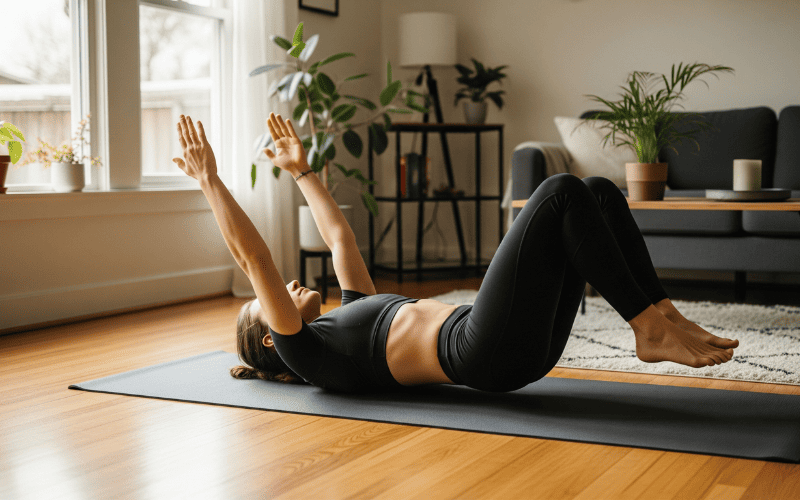
Starting a core workout for beginners at home can feel confusing at first, but it’s one of the best ways to build strength, stability, and confidence without needing a gym. When I first started training at home, Like most beginners, I thought core was just another fancy word for abs. Six-pack, flat stomach, that’s it—right?
But over time, I learned something important: your core isn’t just about looks, it’s about strength, balance, and how your body moves every single day. Whether you’re getting out of bed, lifting groceries, playing with your kids, or just sitting at your desk—your core is working silently behind the scenes.
That’s why if you’re just starting your fitness journey, a core workout at home is one of the best investments you can make in your body. You don’t need expensive equipment, you don’t need hours of training—all you need is consistency and the right set of exercises.
So, grab a mat (or even just a carpet), and let’s get started.
Table of Contents
What Exactly is the Core? (And Why It’s More Than Abs)
When people hear “core,” they often picture those magazine-cover six-packs. But your core is much more than what you see in the mirror. According to Harvard Health, your core includes deep stabilizers, hips, and back muscles—not just abs.
Your core includes:
- Abdominals (front muscles like rectus abdominis & obliques).
- Lower back muscles (spinal erectors).
- Deep stabilizers (transverse abdominis, pelvic floor).
- Glutes & hips (yes, they’re part of the core too).
Think of your core as a house foundation. If the base is weak, no matter how beautiful the house is, it won’t stand strong for long.
For beginners, training the core means building that strong foundation—so you can move better, prevent injuries, and yes, eventually get those toned abs if that’s your goal.
Why a Core Workout for Beginners at Home Matters
I still remember the first time I did a plank. I lasted 15 seconds and felt like I’d just climbed Mount Everest. My arms shook, my stomach burned, and I realized just how weak my midsection was.
Here’s why you, as a beginner, should focus on core workouts:
- Better Posture – A strong core is the main reason a core workout for beginners at home is so effective—it supports your spine, improves posture, and makes everyday movement easier.
- Improved Balance – Simple things like walking, climbing stairs, or bending become easier.
- Injury Prevention – Weak cores are linked to back pain and muscle strains.
- Stronger Everyday Movements – From lifting a bag to doing yoga, the core is involved.
- Confidence Boost – When your midsection feels stronger, you feel more in control of your body.
And the best part? You don’t need fancy machines. Your body weight is enough.
Step-by-Step Core Workout for Beginners at Home
Here’s a step-by-step core workout plan I recommend to beginners. These exercises don’t require equipment, they’re safe, and they can be done in a small space.
👉 Do this workout 3 times a week, with at least one rest day in between.
🔹 Warm-Up (3–5 minutes)
Before jumping into core exercises, always warm up. Do light jogging in place, arm circles, or standing twists. This wakes up your body and prevents injury. This simple core workout for beginners at home includes moves like planks, bridges, and heel taps that anyone can do.
🔹 Exercise 1: Plank (20–30 seconds)
The plank is a key part of any core workout for beginners at home because it strengthens your abs and stabilizers at once.
- Get into a push-up position but rest on your forearms.
- Keep your body straight from head to heels.
- Don’t let your hips sag.
👉 Beginner Tip: Start with 15 seconds if 30 feels too much. Gradually increase over time.
Why it works: Strengthens deep core stabilizers and improves endurance.
🔹 Exercise 2: Dead Bug (10 reps each side)
- Lie on your back, arms extended toward the ceiling, knees bent at 90°.
- Slowly lower your right arm and left leg toward the floor.
- Return to start and switch sides.
👉 Beginner Tip: Keep movements slow and controlled.
Why it works: Builds core stability while protecting your lower back.
🔹 Exercise 3: Glute Bridge (12–15 reps)
- Lie on your back with knees bent and feet flat on the floor.
- Press through your heels and lift your hips until your body forms a straight line from shoulders to knees.
- Squeeze your glutes at the top, then lower slowly.
👉 Beginner Tip: Don’t arch your lower back—focus on glutes and core.
Why it works: Strengthens glutes, lower back, and stabilizes the core.
🔹 Exercise 4: Bird Dog (10 reps each side)
- Start on hands and knees.
- Extend your right arm forward and left leg back.
- Hold for 2 seconds, then switch sides.
👉 Beginner Tip: Keep your hips square—don’t tilt.
Why it works: Improves balance, coordination, and core control.
🔹 Exercise 5: Heel Taps (12–15 reps)
- Lie on your back with knees bent at 90°.
- Slowly lower one heel to touch the floor, then bring it back.
- Alternate sides.
👉 Beginner Tip: Keep your lower back pressed to the floor.
Why it works: Great for activating lower abs gently.
🔹 Exercise 6: Side Plank (15–20 seconds each side)
- Lie on your side, propping up on your elbow.
- Lift hips so your body forms a straight line.
- Hold.
👉 Beginner Tip: Drop your bottom knee to the floor if holding is too tough.
Why it works: Targets obliques (side abs) and builds lateral strength.
🔹 Cool Down (2–3 minutes)
Stretch your lower back with a child’s pose, do some cat-cow stretches, and breathe deeply. This helps your muscles recover.
1-Week Core Workout for Beginners at Home Plan
Here’s how you can fit this into your weekly routine:
- Day 1 – Core workout (above plan)
- Day 2 – Light cardio (walking, cycling, yoga)
- Day 3 – Core workout
- Day 4 – Rest or stretching
- Day 5 – Core workout
- Day 6 – Light cardio or mobility exercises
- Day 7 – Rest
This balance of work and rest keeps your body progressing without burnout. Once you’re comfortable with this core routine, take the next step with our beginners strength training workout for a woman PDF.
Common Beginner Mistakes to Avoid
When I was new, I made almost every mistake in the book. Here are the top ones you should avoid:
❌ Holding your breath – Always breathe steadily.
❌ Rushing the movements – Slow and controlled is key.
❌ Focusing only on crunches – Core is more than abs.
❌ Skipping rest days – Muscles grow and recover when you rest.
❌ Expecting instant abs – Core strength shows before abs do. Be patient.
My Personal Experience (and Why This Works Long-Term)
I’ll share something real—when I started, I was doing endless sit-ups hoping for a flat stomach. It didn’t work. Instead, I got neck pain and frustration.
When I switched to functional core training (like planks, dead bugs, and bird dogs), I noticed real changes:
- My back pain reduced.
- My balance in workouts improved.
- I felt stronger doing daily activities.
- And yes, over time, my abs started showing too.
The secret? Consistency and proper form. Even 15 minutes, done right, beats 1 hour of sloppy crunches.
Tips to Make Your Core Workout for Beginners at Home Effective
- Start small – Even 10 minutes is enough.
- Be consistent – 3 times a week is better than 7 days in a row with burnout.
- Listen to your body – Mild soreness is okay, pain is not.
- Pair with nutrition – Abs are revealed in the kitchen too.
- Track progress – Write down how long you hold planks or how many reps you do.
If you’re juggling family and fitness, our ultimate guide to home workouts for busy moms shows how to stay consistent even on busy days.
Conclusion: Your Core, Your Foundation
Building a strong core at home isn’t about chasing quick six-packs. It’s about creating a foundation for your body to move, lift, and live better. As a beginner, your goal should be to master the basics, stay consistent, and enjoy the small wins.
If you follow this simple plan, in just a few weeks you’ll notice yourself standing taller, moving better, and feeling stronger from the inside out.
So, roll out your mat today, start with that first plank, and remember—you’re not just training your abs, you’re training your life’s foundation.


